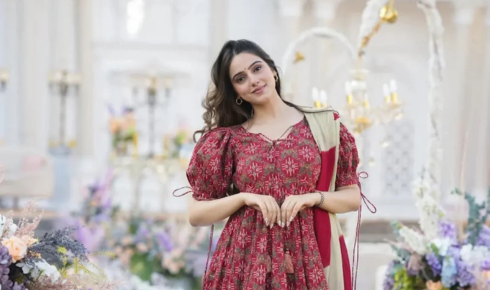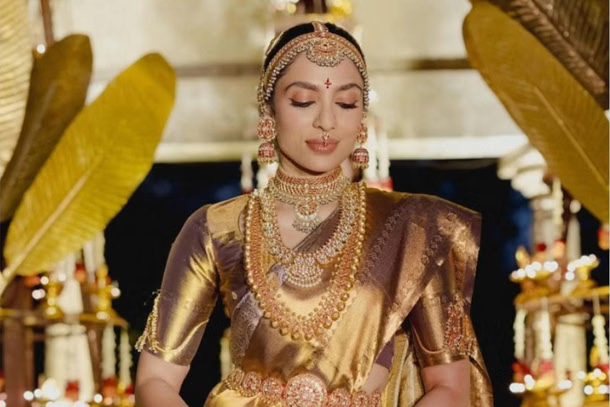
Fashion moves quickly in India, but bridal jewellery moves to a different clock. Designs worn in the Peshwa era still appear, largely unchanged, in wedding photographs taken this year. This is not nostalgia; traditional ornaments survive because they carry meaning, suit Indian attire and display craftsmanship that mass production cannot replicate.
The Core Vocabulary of Maharashtrian Ornaments
Maharashtra offers one of the clearest examples of tradition holding its ground. The essentials of Maharashtrian bridal jewellery form a complete visual language: the Thushi, a choker of closely woven gold beads originally crafted for Peshwa royalty; the Kolhapuri Saaj with its twenty-one symbolic pendants representing deities and auspicious symbols; and the iconic pearl-studded Nath that no Paithani ensemble feels complete without. Each carries layers of meaning related to prosperity, protection or devotion.
Why the Thushi Never Went Out of Style
The Thushi’s longevity is partly engineering. Its woven bead construction distributes weight evenly around the neck, making a substantial-looking piece surprisingly comfortable across a long ceremony. The Kolhapuri Saaj functions as wearable storytelling, each pendant referencing mythology and nature. Ornaments that combine comfort, beauty and meaning simply do not become obsolete.
The Necklace Set as the Trousseau Anchor
Across every region of India, the layered neckpiece remains the centrepiece of bridal jewellery. A traditional gold necklace set with matching earrings offers the grandeur a wedding demands while remaining the most reusable purchase in the trousseau — reappearing at festivals, receptions and family functions for decades. Temple-inspired sets with repousse detailing and mythological motifs have seen a particularly strong revival in recent seasons.
Handcraft That Machines Cannot Match
Much of traditional jewellery’s staying power lies in technique. Hand-woven Thushi beadwork, granulation on a vati, jali piercing and hand-set uncut diamonds in polki produce textures and depth that die-struck production cannot reproduce. Families who commission such pieces are buying a craftsperson’s hours, and that human element is precisely what makes an heirloom feel irreplaceable.
One genuinely new development is how freely traditional styles now travel. Kundan and polki from Rajasthan appear on Maharashtrian brides; temple jewellery from the south pairs with Banarasi silk; and the Nath has become a pan-Indian statement piece. Social media has accelerated this exchange, but the pieces being exchanged remain resolutely traditional — brides are not abandoning heritage, they are curating from a wider inheritance.
Where the Tradition Is Kept Alive
Craft of this order survives only where jewellers invest in it across generations. Heritage houses such as Waman Hari Pethe Sons, serving families since 1909, have played a quiet but vital role in keeping regional designs authentic — training artisans in traditional techniques while adapting weights and finishes for modern wearability. When a bride selects her Thushi from the same house her grandmother did, tradition is preserved not just in the ornament but in the relationship.
Conclusion
Indian bridal fashion will keep evolving in its fabrics and photography, but the jewellery at its heart shows every sign of remaining gloriously traditional. For brides planning their trousseau, the wisest path is to anchor the collection in time-tested classics, chosen from a jeweller who genuinely understands them.