There’s a quiet shift that happens when your water isn’t quite right. It’s not dramatic. No alarms go off. But you start noticing things.
Your shower doesn’t feel as refreshing. Your dishes come out of the dishwasher looking a little cloudy. You run your hand across the faucet and feel a faint chalky film. It’s subtle, but it’s there.
For many homes, the culprit is hard water — and once you understand what that really means, everything starts to click.
The Minerals Behind the Mystery
Hard water forms naturally as groundwater travels through soil and rock. Along the way, it picks up dissolved minerals — primarily calcium and magnesium. These minerals are not harmful to drink. In fact, they’re part of the reason some spring waters taste the way they do.
The issue isn’t health-related. It’s mechanical.
When water evaporates or heats up, those minerals stay behind. That’s how scale forms on showerheads and heating elements. That’s why soap doesn’t lather quite as easily. It’s why your kettle develops that stubborn crust you keep meaning to scrub out.
Minerals don’t disappear. They accumulate.
And over time, they quietly affect how your home functions.
The Everyday Impact You Might Be Ignoring
Hard water has a way of blending into the background. You adapt. You buy stronger cleaners. You scrub more often. You assume that stiff towels or dry skin are just normal.
But they’re often connected.
When minerals interfere with soap, it creates residue instead of a clean rinse. That residue can cling to skin and hair, leaving you feeling less refreshed after a shower. Laundry fibers may feel rougher. Glassware can lose its sparkle.
Then there’s the appliance factor. Scale buildup inside water heaters forces them to work harder. Dishwashers may struggle to clean effectively. Over time, the extra strain can shorten appliance lifespan.
It’s not catastrophic. It’s just inefficient.
What Softening Actually Changes
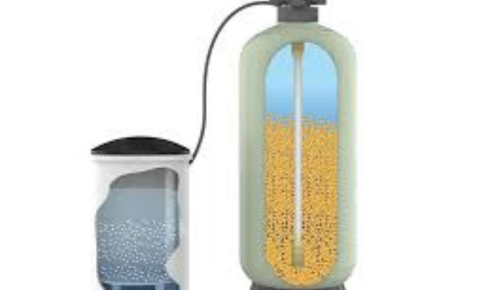
Installing a water softener alters the mineral balance before water flows through your home. Through a process of exchanging calcium and magnesium ions for sodium or potassium, the system reduces hardness.
The result is softened water that behaves differently.
Soap lathers more easily. Surfaces stay cleaner longer. Showers feel smoother. Laundry often requires less detergent. And appliances operate more efficiently because scale isn’t coating internal components.
The change isn’t flashy. It’s gradual. But once you notice it, it’s hard to ignore.
Water Conditioning vs. Softening
You might hear the term water conditioning used alongside softening. While the two are related, they aren’t always identical.
Softening typically refers to removing or exchanging hardness minerals. Conditioning can include broader treatment methods that address scale without fully removing minerals — sometimes through altering how they crystallize.
The right choice depends on your water profile and your household priorities.
If scale buildup is severe, traditional softening may be the most effective route. If you’re looking for reduced scale with minimal sodium addition, conditioning systems might appeal to you.
It’s not one-size-fits-all. And that’s why testing matters.
Testing First, Deciding Second
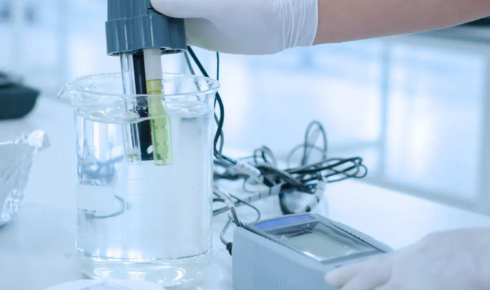
Before investing in any system, it’s wise to test your water. Hardness is usually measured in grains per gallon (GPG) or parts per million (PPM). The higher the number, the more likely you’ll experience noticeable scale and soap issues.
A simple test kit or professional analysis can provide clarity. Once you know your hardness level, you can decide whether a softener is necessary — and what size system makes sense for your home.
Guessing often leads to overspending or under-solving the issue.
Information keeps the process grounded.
Maintenance and Expectations
Like any home system, softeners require upkeep. Salt levels need refilling. Resin beds may need periodic cleaning. Annual inspections help ensure everything runs smoothly.
But maintenance isn’t complicated. Most homeowners adapt quickly, and many modern systems are designed for ease.
It’s also important to keep expectations realistic. Softened water doesn’t “purify” water. It doesn’t remove bacteria or chlorine unless paired with additional filtration. Its primary role is mineral management.
Understanding that distinction prevents disappointment and keeps your goals aligned.
The Long-Term Perspective
Water is one of the most used resources in your home. It runs through every faucet, appliance, and pipe. Even small inefficiencies multiply over time.
Addressing hardness isn’t about luxury. It’s about reducing friction in daily life.
Less scrubbing. Fewer appliance repairs. Softer-feeling showers. Clearer dishes.
These are small improvements individually, but collectively they shape how your home feels.
A Final Thought on Everyday Water
We spend time choosing paint colors and furniture. We invest in visible upgrades.
But water flows behind the scenes, influencing comfort and efficiency in ways we often overlook.
When it’s balanced, you stop thinking about it. It simply works.
And maybe that’s the real goal — not perfection, not marketing promises, just water that supports your home quietly and consistently.