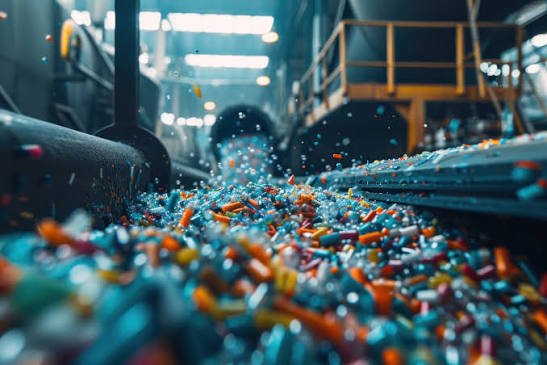
India’s manufacturing sector is undergoing a major transformation as industries look for smarter ways to improve resource efficiency, reduce waste, and build more resilient supply chains. Alongside metals, recycled plastics are emerging as valuable industrial materials that support both sustainability and long-term business growth.
For many years, plastic waste was viewed primarily as an environmental challenge. Today, manufacturers increasingly recognise it as a source of secondary raw materials that can be recovered, processed, and reused across a wide range of industrial applications.
As demand for sustainable materials grows, plastic recycling is becoming an important part of India’s manufacturing ecosystem. Modern manufacturing depends on consistent, high-quality raw materials.
Advances in plastic recycling have made it possible to recover and process plastic waste into industrial-grade materials that meet performance requirements across multiple sectors.
Materials such as polypropylene (PP) and polyvinyl chloride (PVC) can be recycled and converted into high-quality granules that are suitable for manufacturing applications, helping businesses reduce dependence on virgin polymers while improving resource efficiency.
This shift supports both economic and environmental objectives by keeping valuable materials in productive use for longer.
Recycled plastics support industrial manufacturing
Today, recycled plastics are used across a broad range of industries, including:
- Automotive components
- Construction materials
- Electrical products
- Industrial packaging
- Consumer goods
- Infrastructure applications
The use of recycled plastic materials offers several advantages:
- Improved resource efficiency
- Reduced consumption of virgin polymers
- Lower environmental impact
- Better waste utilisation
- Greater supply chain resilience
As manufacturing volumes continue to grow, recycled plastics are becoming an increasingly important source of industrial raw materials.
The role of plastic recycling in a circular economy
The growth of recycled plastics is closely linked to the development of a circular economy.
Instead of treating plastic as a single-use material, circular systems focus on recovering, processing, and returning plastics to productive applications.
A typical recycling process includes:
- Collection
- Sorting and segregation
- Washing and cleaning
- Processing
- Granulation
- Manufacturing
This approach extends the life of valuable materials while reducing waste and supporting more sustainable production systems.
How regulations are encouraging recycled plastic use
India’s Extended Producer Responsibility (EPR) framework is encouraging greater use of recycled plastics across industries.
The Plastic Waste Management Rules require producers, importers, and brand owners to progressively increase the use of recycled plastic content in certain categories of plastic packaging, creating greater demand for high-quality recycled polymers.
As businesses work towards meeting these requirements, reliable sources of industrial-grade recycled materials are becoming increasingly important.
Quality matters in recycled plastic manufacturing
The performance of recycled plastic depends on the quality of its recovery and processing.
Industrial manufacturers require recycled materials that offer:
- Consistent quality
- Uniform granule size
- Reliable mechanical performance
- Controlled contamination levels
- Application-specific properties
Companies investing in advanced recycling technologies are helping improve the consistency and reliability of recycled plastic materials for industrial use.
One example is Jain Resource Recycling, which processes recovered plastic streams into high-quality PPCP and PVC granules through integrated recycling, sorting, washing, and quality testing systems designed for industrial applications.
How recycled plastics will shape the future of manufacturing
India’s manufacturing ambitions will increasingly depend on how efficiently industries use available resources.
As sustainability becomes a business priority, recycled plastics will play a greater role in helping manufacturers improve resource efficiency, reduce waste, and strengthen domestic supply chains.
Growing adoption of plastic recycling, circular manufacturing, and responsible material recovery will create new opportunities for industries seeking both environmental and operational benefits.
Industry leaders such as Jain Resource Recycling are supporting this transition by recovering valuable plastic materials and converting them into industrial-grade products that help strengthen India’s circular manufacturing ecosystem.
The future of manufacturing will not be defined solely by the materials industries produce, but also by how effectively they recover, recycle, and reuse those materials. As India advances towards a more sustainable industrial economy, recycled plastics will remain a key building block of long-term growth.